Field Reality: What Actually Happens in Saleh Bay?
As an operator working directly on the ground, Kompass Komodo believes it is important to share facts that are often overlooked in external media coverage.
1. Saleh Bay Is Managed by the Government
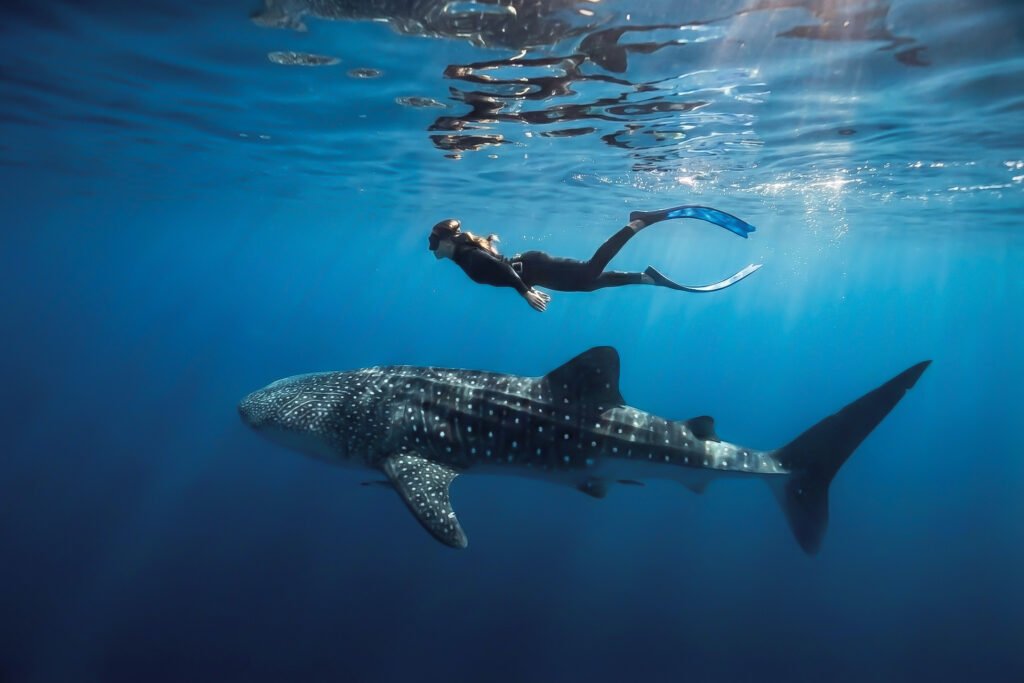
Whale shark activity in Saleh Bay does not happen without regulation. This area:
Is managed by the government of West Nusa Tenggara
Has been officially designated as a marine conservation zone
Operates under tourism activity regulations and monitoring
This means that interactions here are not random tourism practices, but part of a controlled marine tourism zone.
2. Traveler Enthusiasm Is Extremely High
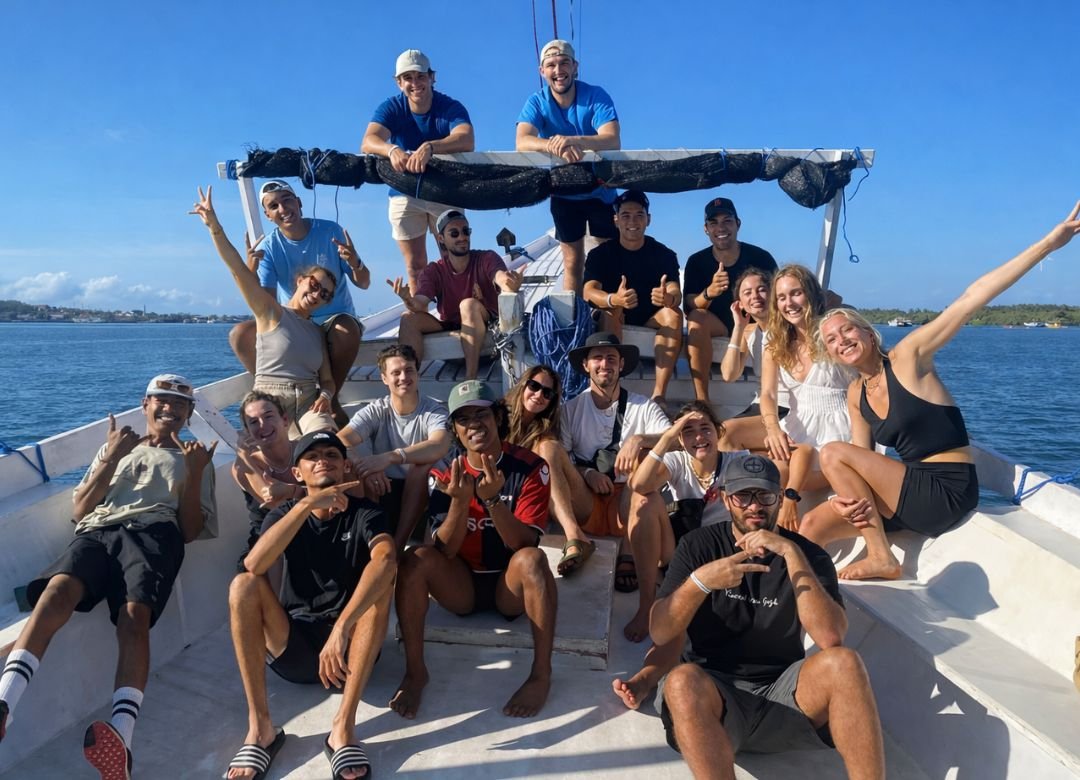
From hundreds of Kompass Komodo guests who joined the Komodo Trip from Lombok, the majority give very positive feedback about the whale shark experience.
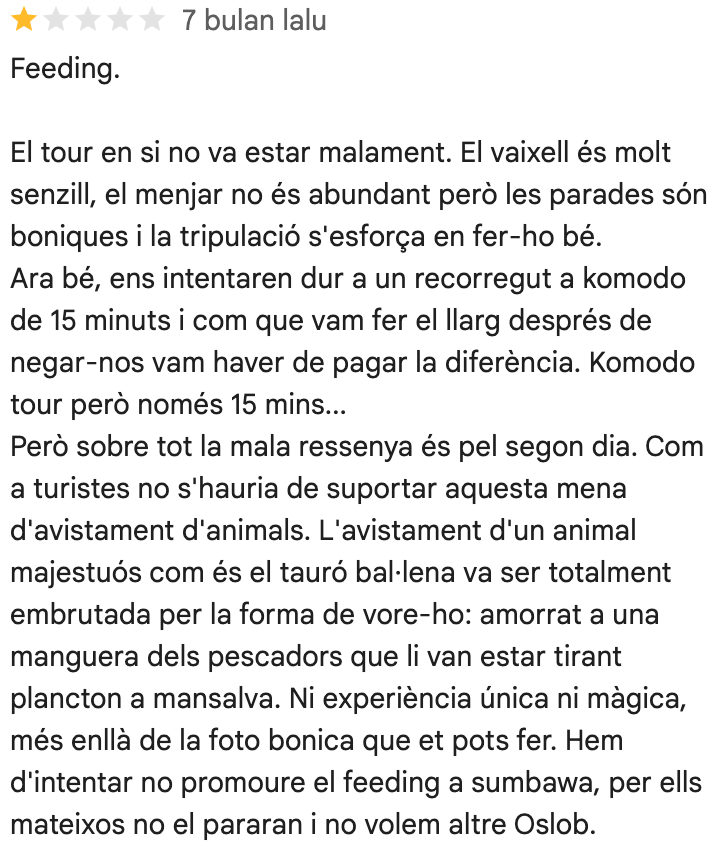
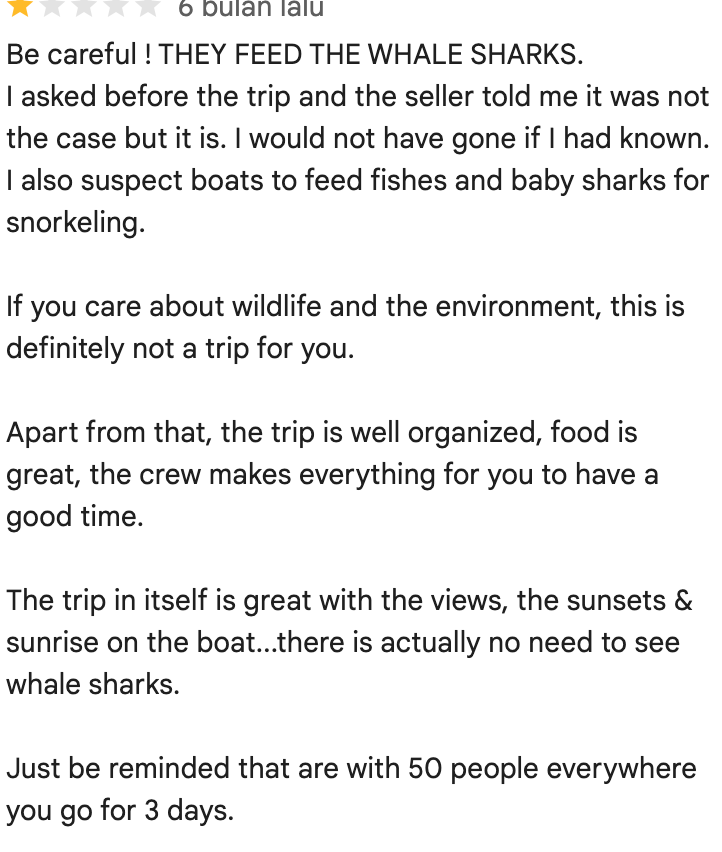
Positive reviews significantly outnumber negative ones.
For many travelers, swimming with whale sharks becomes the emotional highlight of the entire journey — often more memorable than trekking Padar Island or snorkeling at Pink Beach.
3. International Scientists Are Studying Saleh Bay
What many people do not realize is that Saleh Bay has attracted marine scientists from various countries.
Researchers are studying questions such as:
Why do whale sharks frequently appear in this area?
Why do they remain in Saleh Bay for extended periods?
What environmental factors make this region a natural gathering point?
This is especially interesting considering whale sharks are known as long-distance ocean travelers capable of crossing entire seas.
The consistent presence of whale sharks in Saleh Bay suggests there are unique ecological conditions that are still being scientifically explored.
The Counter Argument: Why Not Redirect to Other Destinations?
Some critics often say:
“Why not redirect this activity to other destinations that do not involve feeding?”
This question is fair. Indonesia has countless world-class snorkeling and diving locations.
However, the reality of tourism demand also needs to be considered.
Industry Reality: Whale Sharks Are the Main Attraction of Komodo Trip from Lombok
The Lombok route offers a very different experience compared to Labuan Bajo departures.
It is longer, more adventurous, and fully liveaboard-based. Without whale sharks, the emotional impact of this journey would be significantly reduced.
From real booking data and traveler behavior:
Whale sharks remain the strongest booking driver
Many travelers choose the Lombok route specifically because of Saleh Bay
Demand remains high despite the existing debates
This is why the Komodo Trip from Lombok continues to attract strong interest from international travelers.
Kompass Komodo Perspective: Between Education and Tourism Reality
As an operator, our position is not black and white.
We do not ignore conservation concerns. But we also see firsthand:
Economic benefits for local communities
Growing environmental awareness among travelers
Improving government regulations and management
What we actively promote is responsible tourism practices, such as:
With this approach, tourism does not always have to conflict with conservation.
So, Is Komodo Trip from Lombok Worth It?
The answer depends on your travel values.
If you are looking for:
True ocean adventure
Liveaboard lifestyle experience
A rare chance to encounter whale sharks
A unique sea route to Komodo
Then the Komodo Trip from Lombok remains one of Indonesia’s most unforgettable travel experiences.
However, if you are highly sensitive to wildlife interaction issues, Labuan Bajo-based island hopping tours may be a better alternative.
Conclusion: Travel, Choice, and Responsibility
The Komodo Trip from Lombok is more than just a tour package. It is a long ocean journey that connects travelers with marine giants, remote islands, and the complex reality of modern conservation.
There will always be pros and cons.
What matters most is not only where we travel, but how we travel.
When journeys are done with awareness, education, and responsibility, tourism can become a tool for preservation — not destruction.
And this is where everyone plays a role: operators, governments, travelers, and local communities.