
New Entry Rules in 2026: Is Komodo National Park Limited to 1,000 Visitors Per Day, and Padar Only 50?
Is Komodo National Park Limited to 1,000 Visitors Per Day, and Padar Only 50? Home Over the past few weeks,...
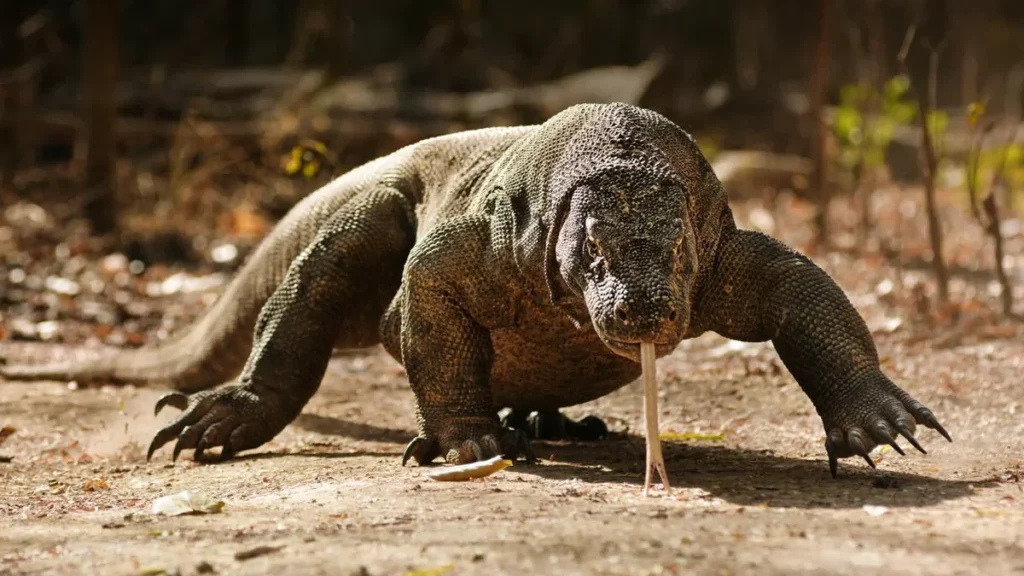
Komodo dragons have always fascinated the world. Many people imagine these ancient reptiles as deadly island monsters. However, modern scientific research is revealing a very different reality: Komodo dragons are not only powerful predators, they also carry biological clues that may help shape future medical treatments. see Komodo Tour Packages on this website.
One of the most discussed discoveries in recent years is the finding that certain components found in Komodo dragon blood have inspired experimental therapies designed to fight infections and accelerate wound healing.
This does not mean that Komodo blood is directly used as medicine. The real story is far more complex and, far more interesting.
Komodo dragons survive in extreme environments. They live in hot, dry climates, consume raw meat and carrion, and are constantly exposed to bacteria. Logically, animals that survive under such conditions must possess exceptional immune defenses.
Researchers confirmed this by identifying antimicrobial peptides (AMPs) within Komodo dragon blood. These peptides are part of the innate immune system and act as natural defenders against harmful microorganisms.
Later studies used this biological information to design a synthetic peptide called DRGN-1, inspired by peptide structures found in Komodo blood (including histone-derived peptides). Laboratory experiments demonstrated that DRGN-1 showed three important properties:
Strong antibacterial activity
Ability to disrupt biofilms (bacterial colonies that resist antibiotics)
Support for wound-healing processes
This is especially significant because modern medicine is facing a serious challenge: many infections today involve bacteria protected by biofilms, which make treatment far more difficult. DRGN-1 attracted scientific attention because of its potential to address both infection control and tissue repair at the same time.
More recent scientific reviews continue to discuss DRGN-1 and similar antimicrobial peptides as promising candidates for future biomedical applications.
Komodo dragons do not possess “magic blood.” Instead, their immune system contains molecular defense mechanisms that inspire laboratory-designed therapeutic compounds. This is what scientists mean when they say Komodo blood may contribute to future medicine.
For many years, a popular myth suggested that Komodo dragons killed prey mainly because their mouths contained extremely dangerous bacteria. More recent research has shown that this explanation is oversimplified.
While Komodo dragons, like most wild animals, naturally host bacteria in their mouths, prey death is more strongly linked to a combination of factors such as:
Severe physical trauma
Blood loss
Shock response
Physiological stress
In other words, Komodo hunting success is not simply the result of “dirty bacteria,” but rather a complex biological and mechanical process.
Another fascinating topic is Komodo venom.
Scientific studies revealed that Komodo dragons possess specialized glands in their lower jaw that produce venom-related compounds. These substances include components that:
Interfere with blood clotting (anticoagulants)
Lower blood pressure
Increase shock in prey
Together, these biological mechanisms help weaken prey after a bite, improving hunting efficiency.
This discovery changed long-standing assumptions about Komodo hunting behavior and placed Komodo dragons among the few reptiles with well-documented venom-related adaptations.
Many visitors believe Komodo dragons move slowly. In reality, Komodo dragons can perform short bursts of speed reaching approximately 20 kilometers per hour.
This is one of the main reasons safety regulations inside Komodo National Park exist. Ranger instructions are not formalities, they are essential for visitor protection.
Scientists have also studied the Komodo dragon genome to better understand their extraordinary physiological capabilities.
Genomic research suggests that Komodo dragons possess genetic adaptations related to:
Cardiovascular performance
Immune system efficiency
Antimicrobial defense mechanisms
These findings help explain why Komodo dragons can survive injuries, infections, and environmental stress better than many other reptiles.
No discussion about Komodo dragons is complete without addressing conservation.
According to international conservation assessments updated in recent years, Komodo dragons are classified as Endangered, with threats linked to habitat loss, climate change, and rising sea levels affecting island ecosystems.
This means seeing Komodo dragons in the wild is not a guaranteed right, it is a privilege that comes with responsibility.
Protecting Komodo dragons is not only about tourism. It is also about preserving:
Unique genetic resources
Ecological balance
Future scientific potential
Komodo dragons represent a rare paradox:
On one side, they are ancient predators that inspire fear and awe.
On the other side, their biology offers insights that may help modern medicine.
The more we learn, the clearer it becomes: Komodo dragons must remain wild and protected, not manipulated or exploited.
If we want future generations to benefit from Komodo’s ecological and scientific value, responsible tourism and conservation must always come first.
If you want to experience Komodo dragons safely and responsibly, choose a local operator that prioritizes transparency and conservation. At Kompass Komodo, we focus on professional operations, official schedules, and strict safety standards to ensure every Komodo journey supports sustainable tourism.
The information in this article is summarized and adapted from peer-reviewed research and reputable science publications, including:
ScienceDaily (2017)
Research on antimicrobial peptides discovered in Komodo dragon blood and immune system activity.
Nature – NPJ Biofilms and Microbiomes (2017)
Publication describing the development and testing of synthetic peptide DRGN-1 for antibacterial and wound-healing properties.
Proceedings of the National Academy of Sciences (PNAS)
Studies on Komodo dragon venom mechanisms and anticoagulant properties.
National Geographic
Reports addressing myths about Komodo dragon oral bacteria and hunting behavior.
Smithsonian National Zoo & Conservation Biology Institute
Biological data on Komodo dragon speed, physiology, and behavior.
IUCN Red List / Conservation Assessments
Official conservation status updates on Komodo dragon populations and threats.
Is Komodo National Park Limited to 1,000 Visitors Per Day, and Padar Only 50? Home Over the past few weeks,...
How Much Is the Komodo Tour from Lombok? Complete 4D3N Price Guide by Kompass Komodo Home One of the most...
Why You Should Book Your Komodo Boat Trip with Kompass Komodo? Home Choosing a Komodo boat trip is not only...