I am not writing this as someone who visited Komodo Island once or twice.
I am writing this as someone who has set foot on Komodo Island dozens of times, walked the same trekking paths again and again, guided hundreds of international guests, and now runs my own Komodo cruises business.
And honestly, I used to wonder about this too.
Why do we often find Komodo dragons in the same spots?
Why are they frequently seen near trekking paths?
Why do they sometimes look extremely calm, inactive, or not moving at all?
These questions don’t only come from me. If you read reviews on Google Maps, TripAdvisor, Reddit, and other travel platforms, you will find many comments suggesting the same thing:
“Komodo dragons are drugged so tourists can easily see them.”
Let’s talk about this openly, logically, and based on real field experience.
What I Saw in the Field: A Pattern That Raises Questions
When I was still working as a Komodo tour guide, I noticed something interesting.
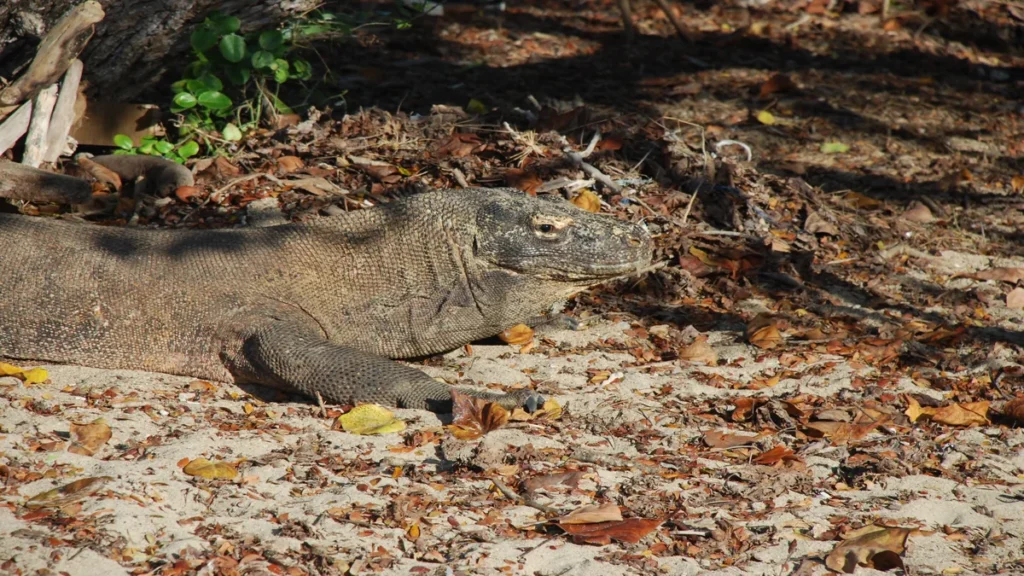
During trekking on Komodo or Rinca Island, we often see Komodo dragons:
Near artificial water ponds
Around ranger station areas
Even resting directly on trekking trails
It is rare for tourists to see Komodos deep inside thick forest or far away from human activity.
Naturally, this raises a fair question:
If Komodos are truly wild animals, why don’t we find them deeper in untouched areas?
Does It Make Sense That Komodos Are Drugged?
Now let’s use logic.
Komodo dragons are:
Apex predators
Can weigh up to 70–90 kg
Have venomous bites
Highly dangerous animals
So the question is:
Who would take the risk of drugging such a dangerous animal on a daily basis?
Sedating wild animals is extremely complex:
If this were truly happening:
There would be medical evidence
Reports of mass Komodo deaths
International conservation investigations
Until today, there is no scientific proof or official report showing that Komodo dragons are being drugged for tourism purposes.
Then Why Do Komodo Dragons Often Look Passive or “Weak”?
This is something that is rarely explained properly to visitors.
1. Komodos Are Energy-Efficient Predators
Komodo dragons are not cheetahs or lions that hunt actively all day. They are ambush predators.
They can:
To tourists, this looks like weakness or sedation. In reality, this is normal reptile behavior.
2. Trekking Trails Are Also Animal Migration Routes
In reality, trekking paths often overlap with:
Deer routes
Wild boar trails
Buffalo movement areas
Komodos understand this pattern.
They prefer:
So it’s not that humans “place” Komodos there, Komodos naturally choose strategic hunting positions.
3. Artificial Water Ponds Are Not Tourist Traps
The water ponds built by rangers or locals are not meant to attract Komodos for photos.
Their real purpose is:
Providing water during extreme dry seasons
Supporting wildlife survival
Reducing animal-human conflict near villages
This is part of conservation management, not tourism manipulation.
The Real Issue: Lack of Education
In my opinion, the main problem is not whether the drugging rumor is true or false.
The real issue is:
Lack of proper education for visitors.
Many tourists arrive expecting:
Close-up Komodo photos
Active Komodo movement
Zoo-like experiences
But Komodo National Park is a national park, not a zoo.
If you don’t see Komodos on your visit, that is normal.
If Komodos are resting, that is natural.
If Komodos keep distance, that is healthy for the ecosystem.
My Hope as a Tourism Operator
As someone whose livelihood depends on Komodo tourism, I want to say this clearly:
We should never sacrifice nature for short-term tourist satisfaction.
I hope that:
Rangers communicate more openly with visitors
Tour guides focus more on education, not only photos
Authorities strengthen interpretation boards and information systems
Tour operators stop selling unrealistic wildlife expectations
Transparency builds long-term trust.
Final Thoughts: Let Komodo Stay Wild
Whether this rumor is true or not, one thing is clear for me:
I never want this to happen.
Let Komodo dragons remain:
If visitors come and don’t see Komodos that day, it is not a failure.
It is a lesson about nature.
Because Komodo dragons live in a national park, not in cages.
And that is exactly what makes Komodo Island truly special.