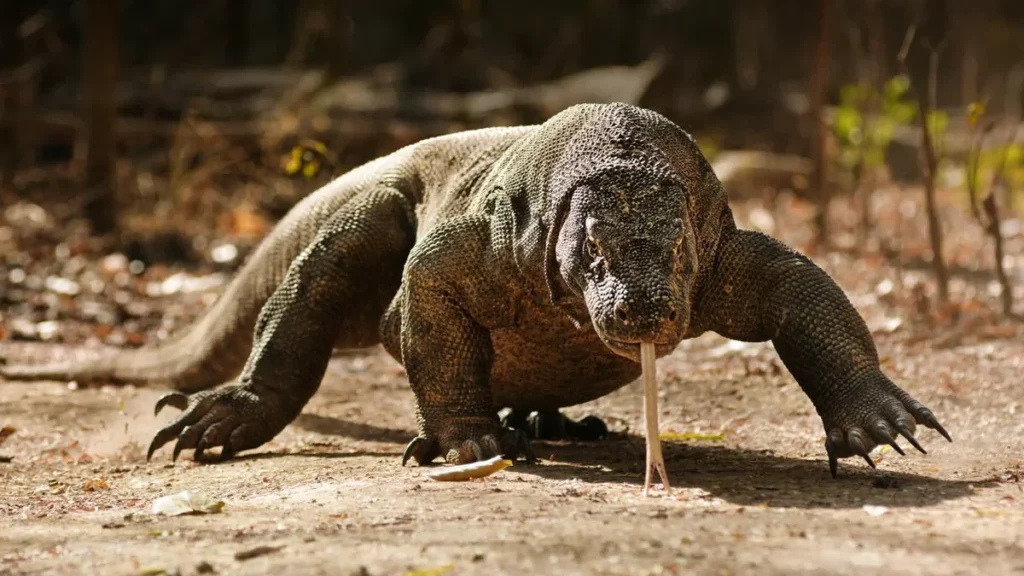
The Predator: When Nature Still Holds the Power
Komodo Dragon. In a world filled with technology, skyscrapers, and unlimited internet access, there is still one place in Indonesia where nature remains the true ruler. This is where the Komodo Dragon lives, an ancient creature that has survived through changing eras and now stands as a symbol of the natural power of the Indonesian archipelago.
Encountering a Komodo Dragon is not like seeing an ordinary animal. When you stand just a few meters away from this massive, scale-covered giant, you will feel a wild presence that no zoo or documentary screen can ever recreate. This is the creature that reminds humanity that the Earth does not fully belong to us.
What Is a Komodo Dragon?
The Komodo Dragon (Varanus komodoensis) is the largest living lizard species in the world. Its body length can exceed 3 meters, with a weight reaching tens of kilograms. It has a muscular body, powerful jaws, and calm yet intimidating movements.
What makes the Komodo Dragon truly special is not only its size, but also the fact that this species is found naturally only in Indonesia. Its original habitat is located within Komodo National Park, making Indonesia the sole home of the last living dragons on Earth.
Natural Habitat of the Komodo Dragon
Komodo Dragons live in dry and open environments such as savannas, monsoon forests, shrublands, and rocky coastal areas. These environments allow them to regulate body temperature by basking in the morning sun before becoming active hunters.
Komodo Island, Rinca Island, and surrounding areas of Flores serve as the main regions where Komodo Dragons thrive. These islands provide an ideal combination of climate, natural prey, and living space that supports the survival of this extraordinary species.
Body Anatomy: A Natural Survival Machine
Every part of a Komodo Dragon’s body is designed for efficient survival:
Sharp serrated teeth for tearing flesh
Forked tongue for detecting prey scents
Thick scaly skin as natural armor
Large tail for balance and defense
Strong claws for gripping prey
Their sense of smell is extremely powerful. With a special sensory mechanism in the roof of their mouth, Komodo Dragons can track the scent of carcasses or prey from long distances.
How Komodo Dragons Hunt
Komodo Dragons are not rushed hunters. They rely on patience and calculation.
Typically, a Komodo Dragon hides behind bushes or rocks, waiting for prey to come close. When the distance is short enough, it attacks with a fast bite that causes deep wounds and heavy bleeding.
Afterward, the Komodo Dragon may follow its injured prey from a distance until it becomes weak. This strategy makes the Komodo Dragon an extremely efficient predator, even though it rarely runs long distances.
Facts About Komodo Dragon Venom
Modern research has confirmed that Komodo Dragons possess venom glands that produce anticoagulant compounds. This venom intensifies bleeding and lowers blood pressure in prey.
These biological effects cause prey to weaken rapidly and increase the Komodo Dragon’s chances of securing its meal. This is why Komodo Dragon bites are considered extremely dangerous.
Diet of the Komodo Dragon
Komodo Dragons are true carnivores. They prey on deer, wild boars, birds, and even large animal carcasses.
Their ability to consume carrion makes Komodo Dragons natural ecosystem cleaners. Without them, leftover carcasses could increase disease spread and disrupt environmental balance.
Reproduction and the Phenomenon of Virgin Birth
Komodo Dragons reproduce sexually, but they also possess a rare ability known as parthenogenesis — where females can produce offspring without male fertilization.
This phenomenon allows populations to survive under certain conditions, although genetic diversity remains a crucial factor for long-term conservation.
Why Do Komodo Dragons Only Live in Indonesia?
Komodo Dragons evolved uniquely in the region of Nusa Tenggara. The combination of climate, island geography, and prey availability has created a habitat that cannot easily be replicated elsewhere.
This is why Komodo Dragons cannot live freely outside Indonesia without facing serious health and environmental risks.
Conservation Status of the Komodo Dragon
Currently, Komodo Dragons are classified as Endangered.
The main threats include:
The existence of Komodo National Park serves as the primary protective barrier to ensure this species remains preserved for future generations.
Seeing Komodo Dragons During a Komodo Tour
Many travelers choose to see Komodo Dragons through Komodo Tour Packages with Kompass Komodo.
👉 Internal Link Placement:
Komodo Tour Kompass Komodo:
https://www.komodotripfromlombok.com
👉 Komodo Tour from Lombok:
https://www.komodotripfromlombok.com/komodo-tour-from-lombok
During visits, travelers must follow safety protocols guided by professional rangers to protect both humans and wildlife.
Conclusion: The Last Dragons That Must Be Protected
Komodo Dragons are not just tourism icons. They are living world heritage.
When you step into their natural habitat, you are standing in the final home of ancient dragons. Protecting Komodo Dragons means protecting Indonesia’s natural balance.
And when you look into the eyes of a Komodo Dragon for the first time, you will understand one simple truth:
nature will always be greater than humanity.